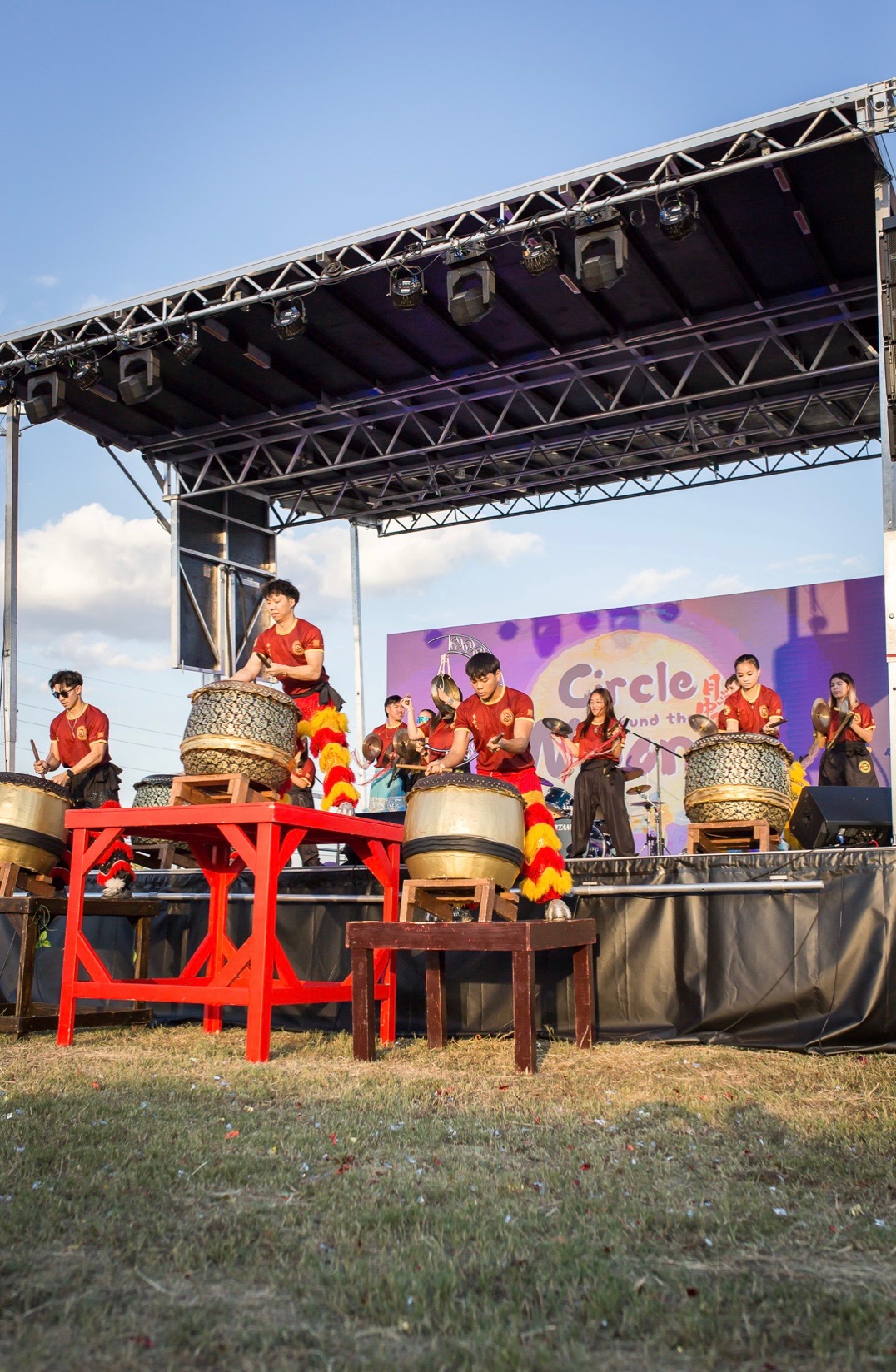
Every Lunar New Year, long before the first firecracker lights up the night or the first red envelope changes hands, the streets come alive to a familiar rhythm: the pounding of drums, the crashing of cymbals, the energy humming in the air. For families across the city, that heartbeat is the real signal that the celebration has officially begun.
For sophomore William Wu, that rhythm feels like coming home.
“Lunar New Year basically feels like Christmas or Thanksgiving for me,” Wu said. “Just coming together is the most important tradition for our family.”
His house fills up with relatives, red decorations, and enough food to feed the whole block.
“It’s just about having a very elaborate feast on the table,” Wu said. “There’s no specific set of dishes, but there is always something good. I really like Peking duck.”
He doesn’t wear traditional clothes, but the older generation does. “My grandparents always wear these embroidered Chinese shoes,” Wu said. “It’s a tradition for them.”
Meanwhile, Sang Cao celebrates with her own version of joyful chaos.
“Lunar New Year means a celebration with my family,” Cao said. “We go out to eat, and then we play games, card games mostly.”
Her favorite part is the gambling.
“Giving out money and gambling is important in my family,” Cao said. “I don’t even know what the card game is called, we just play.”
Every year, Sang dresses in her áo dài and joins her family at the temple.
“You pray to the monks,” Cao said. “I hope for more money and great things to come.”
And then the night just becomes a blur of food, laughing, and too many relatives trying to teach each other rules to games that nobody fully remembers.
“It’s also about family time,” Cao said. “We always end up staying up too late playing games and eating leftovers.”
But nothing stops a room—inside or outside—like the moment the lion dancers arrive.
Drums pound, cymbals crash, and kids race to the sidewalks while adults lean out from porches and balconies. The lions blink and snap and leap, and for a moment the whole street feels alive.
For Eliana Dinh, that feeling is why she performs.
“I was nervous the first time,” Dinh said, “but the second we started moving it was amazing. I grew up watching lion dances at New Year and I wanted to be part of that energy.”
Dinh usually takes the lion head, the heavier and more demanding of the two.
“It’s heavy and exhausting,” Dinh said, “but there’s this rush you can’t get anywhere else.”
Her favorite moments always involve the kids in the crowd.
“The best part is seeing kids’ faces when they think the lion is real,” Dinh said. “They scream and laugh, and suddenly all the jumping and lifting feels worth it.”
Her team practices twice a month, more once the season gets busy.
“Sometimes the drums get faster than we expect,” said Dinh. “You just have to keep up. It keeps you on your toes the whole time.”
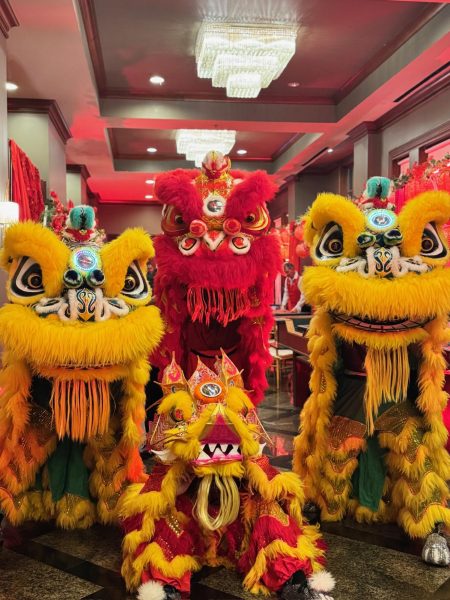
Tiger Nguyen, who dances with Lee’s Golden Dragon, had a similar beginning.
“I started lion dance in Hawaii when I was five,” Nguyen said. “I saw my brothers do it, and since it was around my family, I just decided I wanted to, too.”
Now he trains on Fridays and Sundays.
“I like lion dancing because it’s been there my whole life,” Nguyen said. “It’s something I can do with my brothers.”
Nguyen generally plays the tail or the drums, though he has done the head before, as well.
“The hardest part is having good endurance,” Nguyen said. “During Chinese New Year, you do it over and over again and it gets really tiring.”
Still, the adrenaline keeps him coming back.
“The funnest part is doing tricks,” Nguyen said. “And honestly, when the crowd cheers it feels like I can do anything.”
His favorite performance was at Katy Asian Town.
“It was a really big show,” Nguyen said. “The crowd was huge and loud. It’s not just performing—it’s sharing a moment with everybody.”
More than anything, lion dancing keeps him grounded.
“Lion dancing keeps me connected—to my family, my friends and my culture,” said Nguyen. “It reminds me where I come from.”
At home, the holiday remains firmly based in family for students like William and Sang.
“It’s about sharing stories from this past year and spending time together,” Wu said.
“You remember why you love your family and your traditions,” Cao added.
Food also evokes meaning on its own.
“Each dumpling represents wealth and luck,” Cao said.
“And fish means you always have something left over,” added Wanjun Liang, another student. “It means you won’t spend everything—you have savings, good fortune.”
For Liang, this day feels alive in ways most days don’t.
“I like the vibe of it,” Liang said. “Everyone’s active, everyone’s home. Most days my family’s busy, but on Lunar New Year, everybody comes home to eat.
As for the performers, their meaning is in the movement.
“Every movement, every drumbeat has a purpose,” Dinh said. “It’s not just a dance – it feels alive.”
“You feel the energy, the crowd, the drums-all of it at once,” Nguyen said. “That’s what makes it magical.”
With the loud drums, late-night games, family meals, and the flash of red envelopes, the new year jumps into the world, warm and noisy, full of the memory to be sustained by all after the last firework dies.